
ST ANDREWS CHURCH & BROADWATER CENTRE
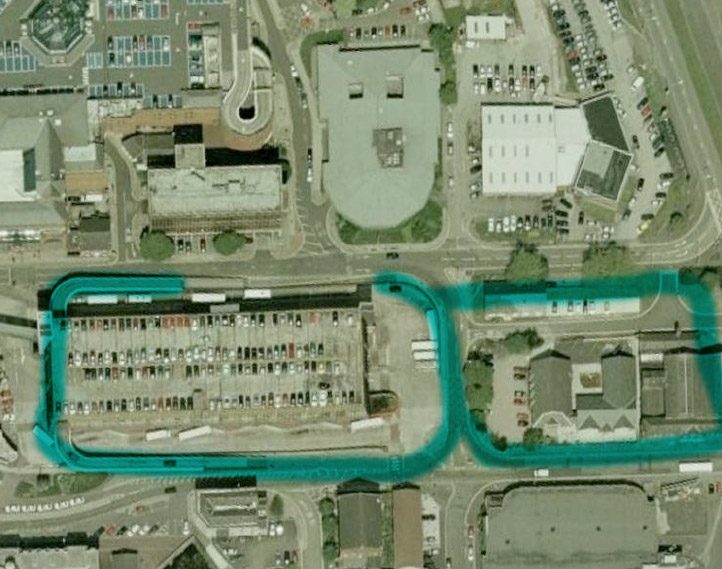
- Demolition of Church & Former Victorian Swimming Baths
- Works carried out next to busy town centre road
- Soft strip and Asbestos Removal by CBL In-house team
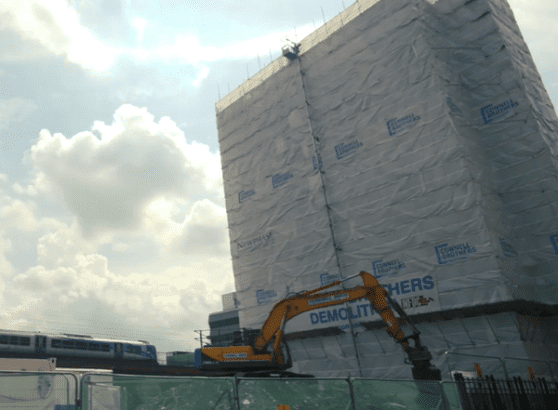
- Demolition was carried out using an excavator equipped with a pulveriser
- Works were carried out under the archaeologists’ watching brief
- Three swimming pools of different sizes exposed at rear of building
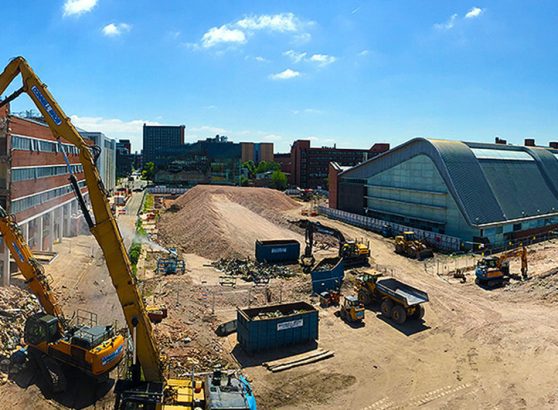
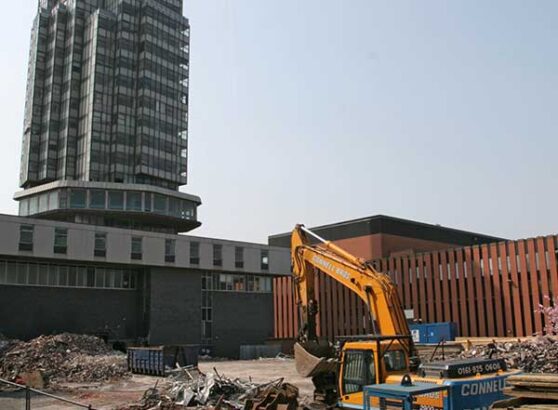
Connell Brothers were appointed by Rochdale Metropolitan Borough Council to carry out the demolition of the town centre mutli-storey car park and bus station together with the demolition of the 14 storey Municipal Offices and the associated link bridges leading to the adjacent shopping centre. As the project progressed Connell Brothers were also awarded the contract to carry out the demolition of the adjacent St Andrews Church and Broadwater Centre and to form a surface car park.
The building fronted Smith Street which is the entrance for buses to the new bus station and a busy access road for shoppers to Rochdale Town Centre.
The Broadwater Centre was an old Victorian swimming bath that had been converted into a theatre but had fallen into disrepair. As part of the demolition works an archaeologist was appointed by Rochdale council to detail any items of interest and record the original features as demolition progressed.
Following the removal of the asbestos and soft stripping of both buildings demolition was carried out using an excavator equipped with a pulveriser. Firstly St Andrews Church was demolished to provide additional working space and then the rear plant room, chimney and storage areas of the Broadwater Centre was demolished working towards Smith Street.
Once the rear buildings had been demolished the rear wall of the former swimming baths was removed to expose the timber floor that had been constructed over the pools when the building had been converted into a theatre.
The floor was carefully removed to expose the intricate timber framing that had been installed within the pool. These frames were then carefully lifted out to expose the original large stone paviours that formed the bottom of the pool. These works were carried out under the archaeologists’ watching brief. Demolition continued along the back of the building to expose three swimming pools of different sizes and what appeared to be the original bases for a number of changing rooms alongside the pools
Once the archaeologist had recorded the findings the paviours were removed and the base of the pools punctured prior to backfilling with site won crushed material. This allowed access to the front office/storage section of the theatre fronting Smith Street.
Due to time constraints and with the co-operation of Rochdale Metropolitan Borough Council Highways department it was agreed that a temporary pavement closure would be placed on Smith Street and the pavement protected with timber mats. The remaining section of the building was then demolished out of hours and the pavement reopened minimising any disruption to traffic and pedestrians.
Ground floor slabs and footing were removed and the site graded with crushed site won material to provide a safe area. As these works were being completed Connell Brothers were then instructed to form a temporary car park on the site.
Due to the nature of the construction and the short timescale, detailed drawings were not available but a series of overall drawings and typical details were produced by Rochdale Metropolitan Borough Council Highways department.
By working closely with the Highways engineer and using experience gained on the construction of a number of previous car parks the area was graded to suitable falls to avoid the need to install expensive new drainage, kerbs and a timber knee rail were installed together with street lighting.
A number of trees also required removal and part of the existing stone retaining wall to the perimeter was rebuilt. The entire car park was surfaced in porous asphalt to prevent pooling and white lining applied. Height restriction barriers and pay stations installed to finish the works.